
MBBS in Georgia vs Russia (2026)Fees, ECTS, the New State-University Ban & Safety Compared
An expert, factual analysis comparing medical education in Georgia and Russia for Indian aspirants. Discover updated fees, ECTS curriculum advantages, FMGE passing statistics, and essential guidance on Georgia's new public university policy.
⚠️ The One Update That Changes This Entire Comparison2026–27 Intake Reform
Before anything else on this page: Georgia's state (public) universities — including Tbilisi State Medical University (TSMU), the country's flagship medical college — have stopped admitting new international students starting with the 2026–27 academic year.This was announced by Georgia's Education Ministry as part of a "citizen-first" higher-education reform, and confirmed by multiple Georgian and international higher education authorities.
What this means for Indian medical applicants:
- Tbilisi State Medical University (TSMU)is closed to new foreign applicants for 2026–27 admission. (Roughly 45% of TSMU's student body was international before this change).
- Students already enrolled at Georgian state universities are completely unaffected and will complete their degrees normally.
- Private, NMC-listed Georgian universities remain fully open: Indian students should shortlist Georgia's leading private institutions, including New Vision University, David Tvildiani Medical University (DTMU), Georgian National University SEU, Caucasus International University, Georgian American University (GAU), and BAU International Batumi.
Quick Answer: Georgia vs Russia
Choose Georgia if you want a European study environment aligned with the Bologna Process/ECTS credit system, smaller class sizes, a strong safety reputation, and don't mind slightly higher fees — but shortlist only private Georgian universities for 2026–27 admission. Choose Russiaif you want a much larger network of century-old state medical universities, lower average tuition, and a lower cost of living — but confirm the specific university teaches entirely in English through clinical years, since some Russian programs introduce Russian-language clinical postings. Both require NEET-UG and both comply with the NMC's 54-month academic + 12-month internship rule when the specific university is correctly NMC-listed.
Georgia vs Russia: At a Glance Comparison (2026)
Verified point-by-point criteria evaluating curriculum, licensing compliance, costs, and admissions.
| Criteria | 🇬🇪 MBBS in Georgia | 🇷🇺 MBBS in Russia |
|---|---|---|
| Standard Tuition Fee | USD 4,000–8,000/year (private universities) | USD 2,700–10,000/year |
| Total Course Cost (6 yrs) | ~₹25–40 lakh | ~₹18–50 lakh |
| Course Duration | 6 years (5 academic + 1 internship) | 6 years (5 academic + 1 internship) |
| Educational System | European Credit Transfer System (ECTS) — aligned with EU/Bologna Process, degree titled "MD" | Russian Federal State Educational Standard |
| Living Budget | USD 250–350/month | USD 150–250/month |
| New-Admission Access (2026–27) | Private universities only — state universities (incl. TSMU) closed to new international students | Open — no comparable admissions restriction currently in place |
| NMC / WHO Compliance | Yes, at NMC/WDOMS-listed private universities (entirely English medium) | Yes, at NMC-listed universities (verify English-medium status for clinical years specifically) |
| 2024 FMGE Pass Rate (national avg. ~19–26%) | ~35.7% (several top private universities score 50–80%+) | ~30.9% |
| Direct Flight from Delhi | Yes — IndiGo direct, ~4.5–5.5 hours | No direct flights to most university cities; 1–2 stops, 8–14+ hours |
| NEET-UG | Mandatory (Qualifying Score) | Mandatory (Qualifying Score) |
| Indian Student Population (approx.) | ~16,000+ | Larger overall, spread across 60+ universities |
* All figures are indicative 2026 ranges compiled from multiple current sources. Confirm exact fees and NMC-listing status directly with the specific university — never rely on an agent's brochure alone.
Why Choose Georgia (Updated for 2026)
European MD Curriculum, Bologna Process & High FMGE Performance
Why Choose Russia (Updated for 2026)
Century-Old State Academies, Massive Hospitals & Lower Tuition
Georgia vs Russia: Which Should You Choose?
Clear recommendation matrix based on student academic goals, budget, and travel preferences.
| If you prioritize... | Choose |
|---|---|
| Guaranteed eligibility for new 2026–27 admission at a well-known flagship university Georgia's flagship state universities are closed to new applicants | 🇷🇺 Russia |
| A European-aligned ECTS curriculum and strong general safety reputation Private universities only | 🇬🇪 Georgia |
| The strongest recent FMGE pass-rate track record at top individual universities Top private universities significantly outperform Russia's average | 🇬🇪 Georgia |
| Lowest overall cost of living and a wider range of budget-friendly universities Living cost $150–$250/month | 🇷🇺 Russia |
| Guaranteed fully English-medium instruction through every clinical year Verify Russia university-by-university | 🇬🇪 Georgia |
| Direct flight convenience from Delhi ~4.5–5.5 hrs direct with IndiGo | 🇬🇪 Georgia |
Popular MBBS Destination For Indian Students
Explore top NMC & WHO-recognized medical destinations worldwide with affordable fees, English-medium curriculum, and globally valid degrees.

MBBS in Russia
World-renowned government medical universities, top global QS rankings, 100% English medium.

MBBS in Bangladesh
Curriculum matching Indian MBBS syllabus, highest FMGE passing percentage, familiar disease spectrum.

MBBS in Uzbekistan
Fastest-growing medical destination, modern simulation clinics, affordable living cost.

MBBS in Egypt
Huge government university hospitals with thousands of beds, massive clinical patient exposure.
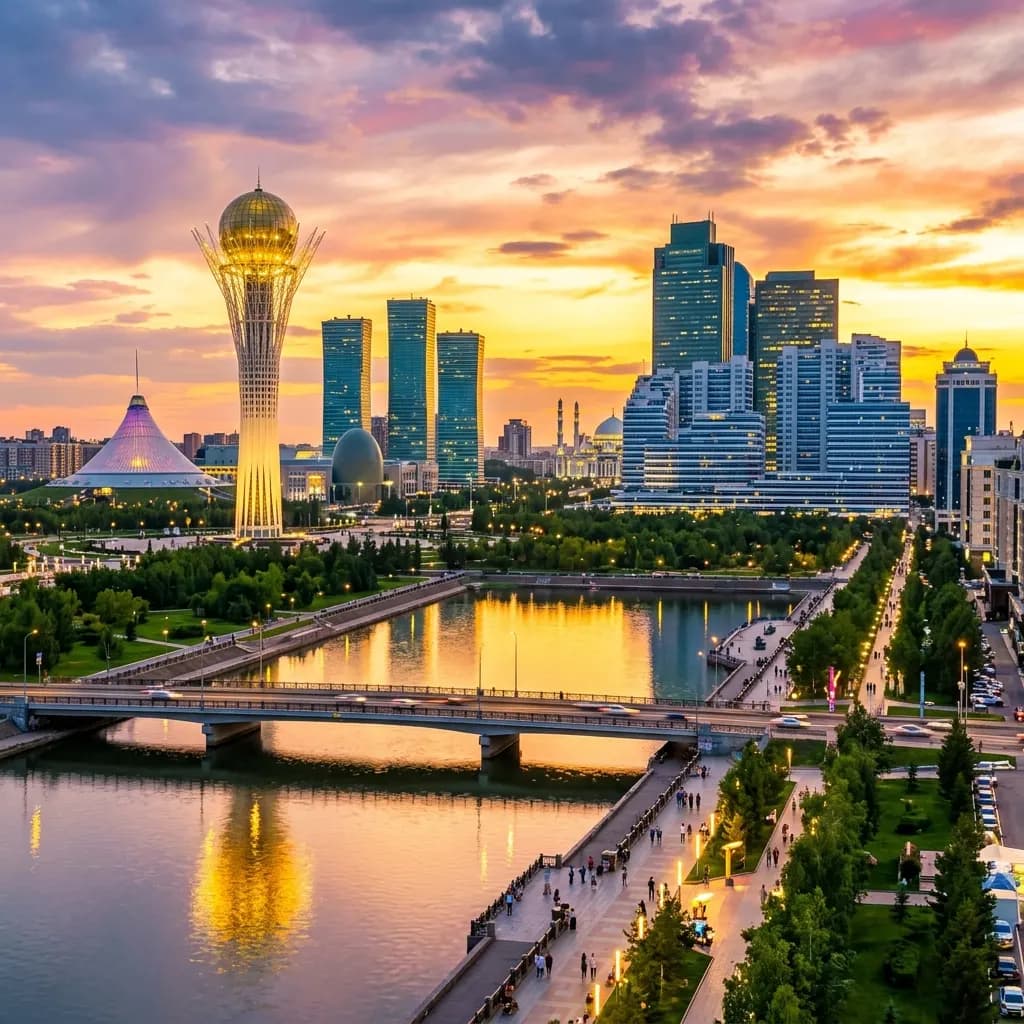
MBBS in Kazakhstan
Top QS ranked national universities, ~3.5 hr direct flight from Delhi, safe European-style cities.

MBBS in Kyrgyzstan
Lowest tuition fees in Asia, high FMGE success rate, authentic Indian dining on campus.

MBBS in Georgia
High quality European medical education, USMLE/PLAB preparation tracks, exceptionally safe country.

MBBS in Nepal
Neighboring country with identical pattern, Hindi & English communication, recognized by NMC.

MBBS in China
MOE-listed English medium universities, world-class laboratory technology and simulation training.
Georgia vs Russia FAQs
Clear, fact-checked answers to the most common questions regarding course duration, NMC regulations, fees, safety, and FMGE.
Georgia suits students wanting a European-aligned ECTS curriculum, strong safety reputation, and (at top private universities) a notably higher FMGE pass rate. Russia suits students wanting lower overall costs and a much larger choice of long-established state universities. As of 2026, Georgia's state universities are closed to new international admissions, so Georgia now means private universities specifically.