Starting Tuition Fees
USD 4,000 / year
The ultimate 2026 guide to MBBS in Georgia. Discover exact fees (USD 4,000 - 8,000/year), NMC guidelines, top WDOMS-approved universities, FMGE/NExT passing rates, and 100% transparent admission process with zero donation.
USD 4,000 / year
Georgia (Europe)
2026-27
5000+
18+
80%
100%
European
| Particular | Details |
|---|---|
| Course Duration | 5 Years + 1 Year Internship (NMC Compliant) |
| Medium of Instruction | 100% English |
| Starting Tuition Fees | USD 4,000 to USD 8,000 per year |
| Living Cost | USD 200 - 300 per month |
| NEET Requirement | Mandatory for Indian Students |
| IELTS / TOEFL | Not Required |
| NMC Recognition | Approved (Follows 2021 Gazette) |
| Currency | Georgian Lari (GEL) (1 GEL ≈ 32 INR) |
| Intake | September & February (Varies by University) |
In November 2021, the National Medical Commission (NMC) of India released a strict gazette regulating Foreign Medical Graduates (FMGs). It is imperative that the university you choose in Georgia complies with these rules; otherwise, your degree will be invalid in India.
1. Course Duration: The MBBS course must have a minimum duration of 54 months (4.5 years). Georgia offers a 5-year academic course, exceeding this requirement.
2. Mandatory Internship: Students must complete a minimum 12-month internship in the same foreign medical institution. Georgian universities mandate a 6th year dedicated entirely to clinical internship.
3. Medium of Instruction: The entire course must be taught in English. All top Georgian universities strictly adhere to a 100% English curriculum.
4. Registration: The student must be registered with the respective professional regulatory body of the country where the degree is awarded (e.g., granting them the license to practice in Georgia). Georgia grants this registration to Indian graduates, fulfilling the final NMC criteria.
Georgia is a member of the Bologna Process, meaning its medical degrees follow the European Credit Transfer System (ECTS). This ensures that the curriculum is globally recognized, allowing students to easily transfer to other European countries or pursue PG in the UK, Germany, or the USA.
Unlike Russia or China, where you might have to learn the local language to study medicine, Georgia offers medical programs completely in English. You only need to learn basic Georgian for clinical interactions with local patients.
Admissions in Georgia are strictly merit-based. Students pay only the official tuition fees directly to the university's bank account. There are absolutely no hidden donations or capitation fees, ensuring 100% financial transparency.
Because the curriculum closely mirrors the Indian medical syllabus and relies heavily on USMLE-based textbooks, Indian students graduating from Georgia have historically achieved some of the highest passing percentages in the FMGE (Foreign Medical Graduates Examination).
Georgia is ranked among the top 10 safest countries globally. With low crime rates, a welcoming culture, and heavily guarded university campuses, it is incredibly safe for both male and female Indian students.
Georgian medical universities boast state-of-the-art infrastructure, including 3D anatomy simulation labs, modern affiliated hospitals, and vast clinical exposure beginning in the 3rd year of study.
Explore the best NMC and WHO-approved medical universities in Georgia for Indian students. Click on any university to view its detailed fee structure, admission process, and campus facilities.
Tbilisi, Georgia
Batumi, Georgia
Batumi, Georgia
Tbilisi, Georgia
Tblisi, Georgia
T’bilisi, Georgia
Tblisi, Georgia
Tblisi, Georgia
Tblisi, Georgia
Kutaisi, Georgia
Tbilisi, Georgia
Tbilisi, Georgia
Tbilisi, Georgia
Tbilisi, Georgia
Tbilisi, Georgia
Tbilisi, Georgia
Tbilisi, Georgia
Tbilisi, Georgia
Tbilisi
Tbilisi
Tbilisi
Batumi
Get a free profile evaluation from our expert counsellors based on your NEET score.
Studying MBBS in Georgia is highly cost-effective compared to private medical colleges in India, where total fees can exceed ₹1 Crore. In Georgia, the total tuition fee for the entire 6-year course ranges from USD 24,000 to USD 48,000, depending on the university's ranking and infrastructure.
Students should also budget for hostel and mess charges, which typically amount to USD 2,500 - 3,500 per year. It's crucial to evaluate the 'Total Cost of Education' rather than just the first-year tuition fee. Below is a comprehensive breakdown of NMC-approved universities in Georgia for the 2026 academic session.
| University Name | Duration | Location | Tuition Fees | Hostel Fees / Year |
|---|---|---|---|---|
| Batumi Shota Rustaveli State University | 6 Years | Batumi | USD 4,000 / Year | USD 2,500 |
| Akaki Tsereteli State University | 6 Years | Kutaisi | USD 4,500 / Year | USD 2,500 |
| Ilia State University | 6 Years | Tbilisi | USD 5,300 / Year | USD 2,500 |
| Tbilisi State Medical University (TSMU) | 6 Years | Tbilisi | USD 8,000 / Year | USD 3,000 |
| Georgian National University (SEU) | 6 Years | Tbilisi | USD 5,500 / Year | USD 2,500 |
| BAU International University | 6 Years | Batumi | USD 6,500 / Year | USD 2,500 |
| European University | 6 Years | Tbilisi | USD 5,000 / Year | USD 2,500 |
| New Vision University | 6 Years | Tbilisi | USD 7,000 / Year | USD 2,500 |
*Disclaimer: Tuition fees are indicative and subject to change based on university policies and currency exchange rates (USD to INR).
Every year, over 20 lakh students appear for NEET in India for roughly 1 lakh seats. For those unable to secure a government seat or afford massive private college donations, Georgia serves as the ultimate alternative.
| Feature | MBBS in Georgia | Private MBBS in India |
|---|---|---|
| Total Fees | ₹20 Lakhs - ₹35 Lakhs | ₹60 Lakhs - ₹1.2 Crores |
| Admission Criteria | NEET Qualification only | High NEET Score or Massive Donation |
| Infrastructure | World-class, European Standards | Varies (Excellent to Average) |
| Degree Recognition | Global (WHO, ECFMG, GMC, NMC) | Global (WHO, NMC) |
| Clinical Exposure | Good, European Protocols | Excellent due to high population |
| Student-Teacher Ratio | 1:10 (Small Focus Groups) | 1:30 or higher |
Contact Nile Education for a free profile evaluation. We analyze your NEET score, budget, and career goals to shortlist the top 3 universities in Georgia tailored for you.
Submit scanned copies of your 10th & 12th marksheets, NEET scorecard, and a valid passport. We initiate the application process with the chosen university immediately.
Within 3-5 working days, you receive a Conditional Offer Letter. Many Georgian universities also conduct a brief Zoom interview to assess basic English proficiency and motivation.
We submit your documents to the National Center for Educational Quality Enhancement (NCEQE) in Georgia. This critical step translates and verifies your Indian documents. Approval takes 15-30 days.
Once the Ministry approves, the university issues the Official Invitation Letter. Nile Education then files for your Student Visa (Type D3) at the Georgian Embassy in New Delhi.
Upon receiving the e-Visa, we assist with flight bookings, forex, and pre-departure briefings. Our representatives receive you at Tbilisi airport and settle you into your hostel.
While not as extreme as Russia, Georgian winters can be cold, with temperatures occasionally dropping below freezing. Students from South India may take a few months to acclimatize.
Although the course is in English, everyday interactions in markets or public transport require basic Georgian or Russian. The universities provide language classes to help you navigate this.
The European education system is rigorous. Students must maintain minimum attendance and credit scores. Failing subjects can lead to delayed graduation.
Adjusting to a new country can be challenging, but Georgian medical universities make the transition seamless for Indian students by offering excellent accommodation and familiar food.
The medical curriculum in Georgia spans exactly 6 years, matching European standards and heavily utilizing USMLE-based textbooks. Here is the phase-wise breakdown:
Focuses on foundational sciences: Human Anatomy, Physiology, Biochemistry, Histology, and Medical Genetics. Students utilize modern labs and 3D simulation for anatomy.
Bridging the gap between theory and practice: Pathology, Pharmacology, Microbiology, Forensic Medicine, and Introduction to Clinical Diagnosis.
Hands-on hospital rotations: Internal Medicine, General Surgery, Pediatrics, Obstetrics & Gynecology, Neurology, and Psychiatry.
Mandatory 1-year clinical rotation across all major departments in affiliated Georgian hospitals, fulfilling the NMC 2021 Gazette requirement for Indian students.
Don't let high fees in India stop you from becoming a doctor. Join 5000+ Indian students already studying in NMC-approved universities in Georgia.
Explore top NMC & WHO-recognized medical destinations worldwide with affordable fees, English-medium curriculum, and globally valid degrees.

World-renowned government medical universities, top global QS rankings, 100% English medium.

Curriculum matching Indian MBBS syllabus, highest FMGE passing percentage, familiar disease spectrum.

Fastest-growing medical destination, modern simulation clinics, affordable living cost.

Huge government university hospitals with thousands of beds, massive clinical patient exposure.
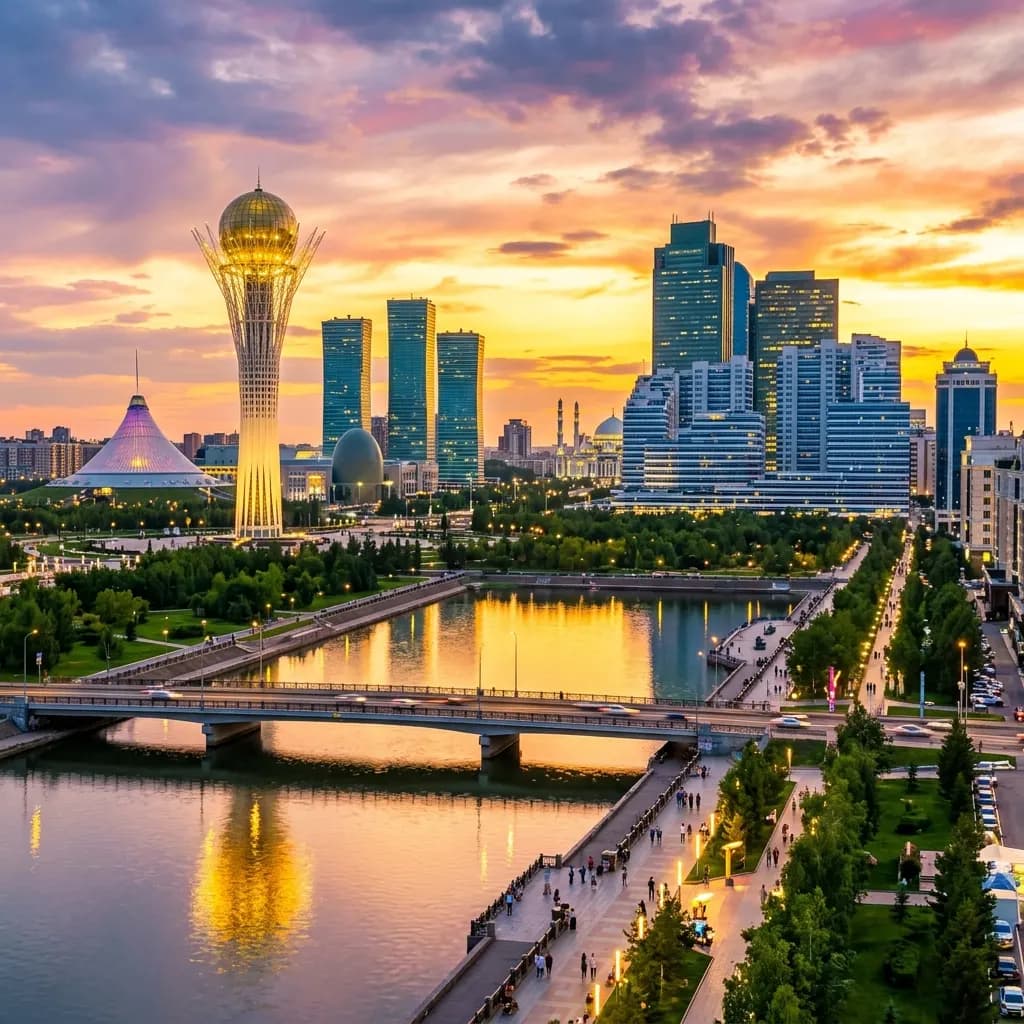
Top QS ranked national universities, ~3.5 hr direct flight from Delhi, safe European-style cities.

Lowest tuition fees in Asia, high FMGE success rate, authentic Indian dining on campus.

High quality European medical education, USMLE/PLAB preparation tracks, exceptionally safe country.

Neighboring country with identical pattern, Hindi & English communication, recognized by NMC.

MOE-listed English medium universities, world-class laboratory technology and simulation training.
Yes, MBBS in Georgia is 100% valid in India provided the university is recognized by the World Health Organization (WHO) and strictly adheres to the National Medical Commission (NMC) 2021 guidelines (minimum 54 months course + 12 months internship in English).
The total tuition fee for the 6-year MBBS course in Georgia ranges from USD 24,000 to USD 48,000 (approx. ₹20 Lakhs to ₹40 Lakhs). You should also budget an additional USD 2,500 - 3,500 per year for hostel and food.
Yes, qualifying the NEET-UG exam is mandatory for Indian students to secure admission in any medical university in Georgia and to appear for the FMGE/NExT exam in India later.
Georgia is considered one of the safest countries in Europe. With extremely low crime rates, friendly locals, and highly secure university campuses with 24/7 CCTV surveillance, it is exceptionally safe for both male and female students.
The medium of instruction for the entire medical program in Georgia is 100% English. However, universities teach the local Georgian language as a subject so students can interact with patients during clinical rotations.
No. Admissions in Georgia are strictly merit-based. Students pay the official tuition fee directly to the university's bank account. There is no concept of capitation fees or hidden donations.
Both have their pros. Georgia offers a European-style curriculum, completely English medium from day one, and slightly milder winters. Russia has older, highly ranked government universities and lower tuition fees. The choice depends on your budget and preference for weather and location.
Yes. Due to the massive influx of Indian students, almost all top medical colleges in Georgia have dedicated Indian messes in their hostels serving both vegetarian and non-vegetarian Indian meals.